
How Professionals Alter Your Bridal Gown for the Perfect Fit
The journey to the altar involves countless meticulous decisions, but none are quite as personally significant as selecting and perfecting the ensemble worn down the aisle. A wedding dress is rarely ready to wear straight from the manufacturer, as it is built to standard industry sizing matrices rather than a person’s unique anatomical contours. Professional alterations bridge this gap between factory measurements and the specific curves of an individual's silhouette. Entrusting this delicate process to an expert ensures that structural integrity, intricate beadwork, and fabric draping remain entirely uncompromised. Many individuals underestimate the sheer complexity of garment reconstruction, which requires a blend of historical tailoring knowledge and modern textile engineering. Skilled specialists spend hours analyzing how different fabrics drape, stretch, and react to physical movement under various lighting conditions.
Assessing the Initial Structural Silhouette
The transformation process begins with an exhaustive fitting session where an expert analyzes how the fabric hangs from the shoulders, bust, and hips. During this initial consultation, the specialist evaluates the inner supportive architecture of the garment, such as the boning, integrated bra cups, and lining layers. Adjusting a delicate bridal gown requires a profound understanding of how shifting a single seam can alter the balance of the entire piece. Pinning the fabric along the natural contours of the torso allows the tailor to visualize the necessary structural adjustments without damaging the underlying material. This diagnostic phase is crucial for identifying potential fit issues that could cause discomfort during the lengthy wedding celebration. The artisan must also consider the height of the chosen footwear to calculate exactly how the skirt should interact with the floor. Every measurement captured during this first meeting serves as a foundational blueprint for all subsequent technical sewing work. Establishing this precise structural baseline ensures that the final garment supports natural posture and free movement.
Harmonizing the Proportions of Accessories
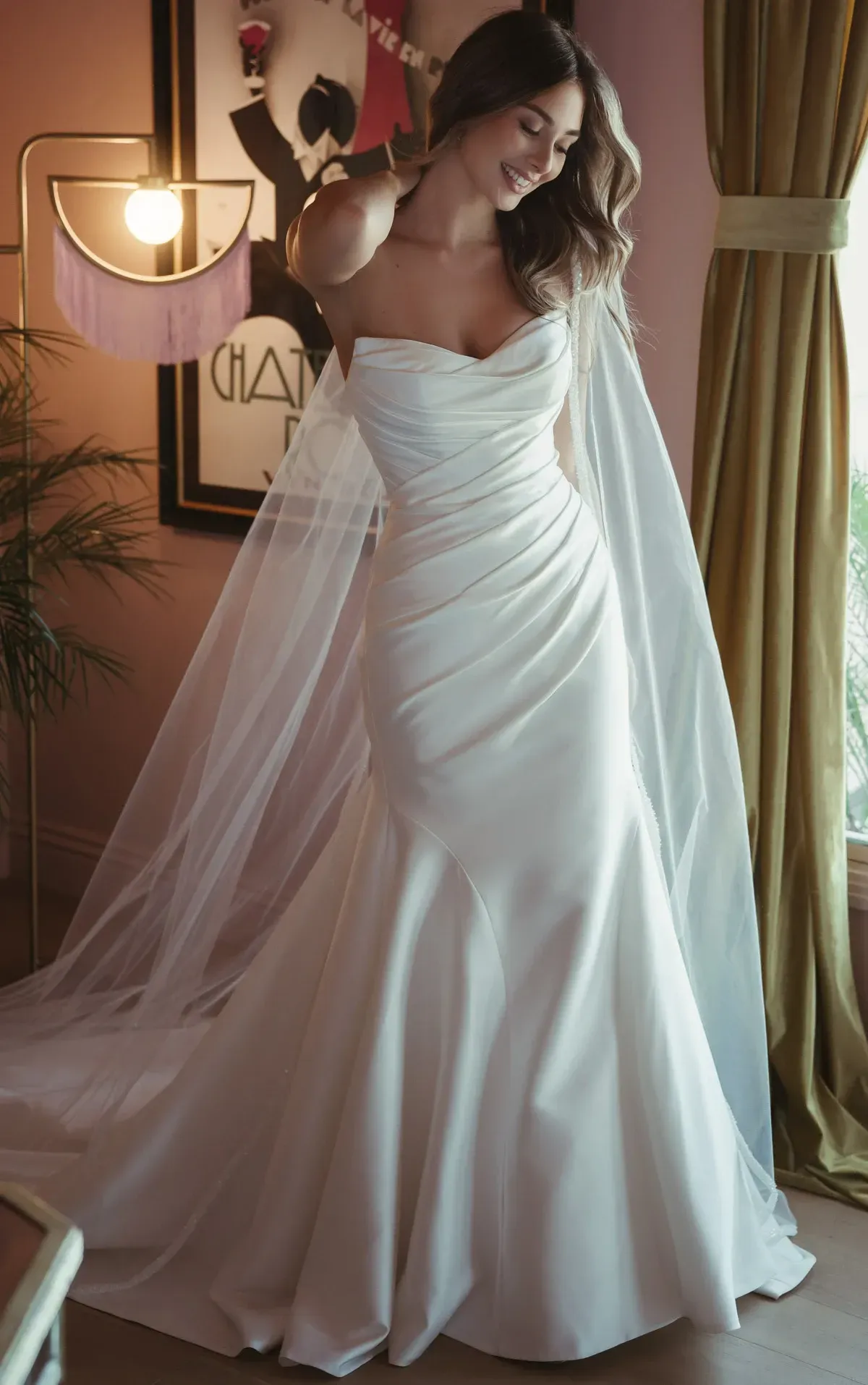
Perfecting the primary garment is only one component of creating a cohesive, visually stunning appearance for the walk down the aisle. Accessories must be integrated thoughtfully into the design to ensure they complement the neckline, back details, and overall silhouette seamlessly. According to design data published by Brides.com, traditional wedding veils exhibit a massive range of styles that can span from a modest four inches to a dramatic one hundred twenty inches in length. Choosing the correct length for your bridal gown depends heavily on where the back elements and train of the main garment terminate. A specialist will help position these delicate tulle accents during a fitting to ensure they do not obscure intricate lace patterns or custom embroidery work. The weight of a longer headpiece must also be balanced carefully against the hairstyle and the bodice structure to prevent physical discomfort. Properly coordinating these intersecting fabric layers creates a fluid, uninterrupted visual line that enhances the wearer's natural height. Aligning the scale of every accessory guarantees that the entire ensemble functions as a unified work of wearable art.
Sculpting the Bodice for Secure Support
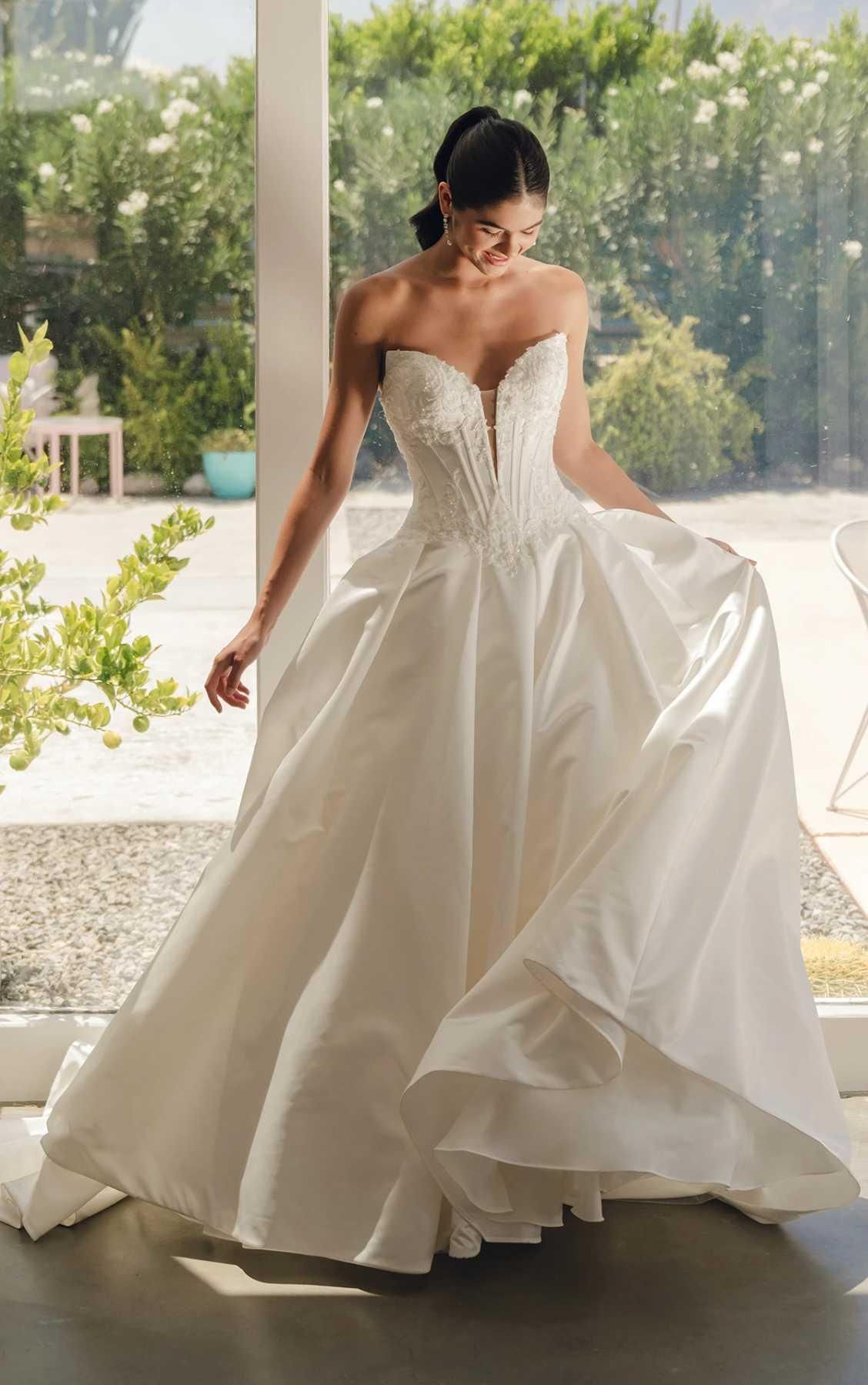
A perfectly fitted torso section provides the necessary foundational stability for the entire weight of a heavy, multi-layered skirt assembly. Tailors achieve this secure fit by carefully taking in the side seams, princess seams, or the zipper closure line with immense precision. When customizing a strapless bridal gown, the internal boning must be contoured directly to the ribcage to prevent the fabric from slipping down over time. Specialists often hand-sew premium, custom-shaped bra cups directly into the lining to eliminate the need for restrictive external undergarments. This delicate interior manipulation enhances natural curves while ensuring the neckline of your bridal gown lies perfectly flat against the skin without gaping. The artisan must meticulously replicate the original manufacturing stitching techniques to keep the exterior appearance completely flawless and unblemished. Testing the tightness of the bodice while sitting down ensures the wearer can breathe easily and celebrate comfortably for hours. A sculpted bodice ultimately distributes the garment's weight evenly, preventing fatigue and allowing for effortless elegance.
Contouring Intricate Lace and Delicate Embellishments
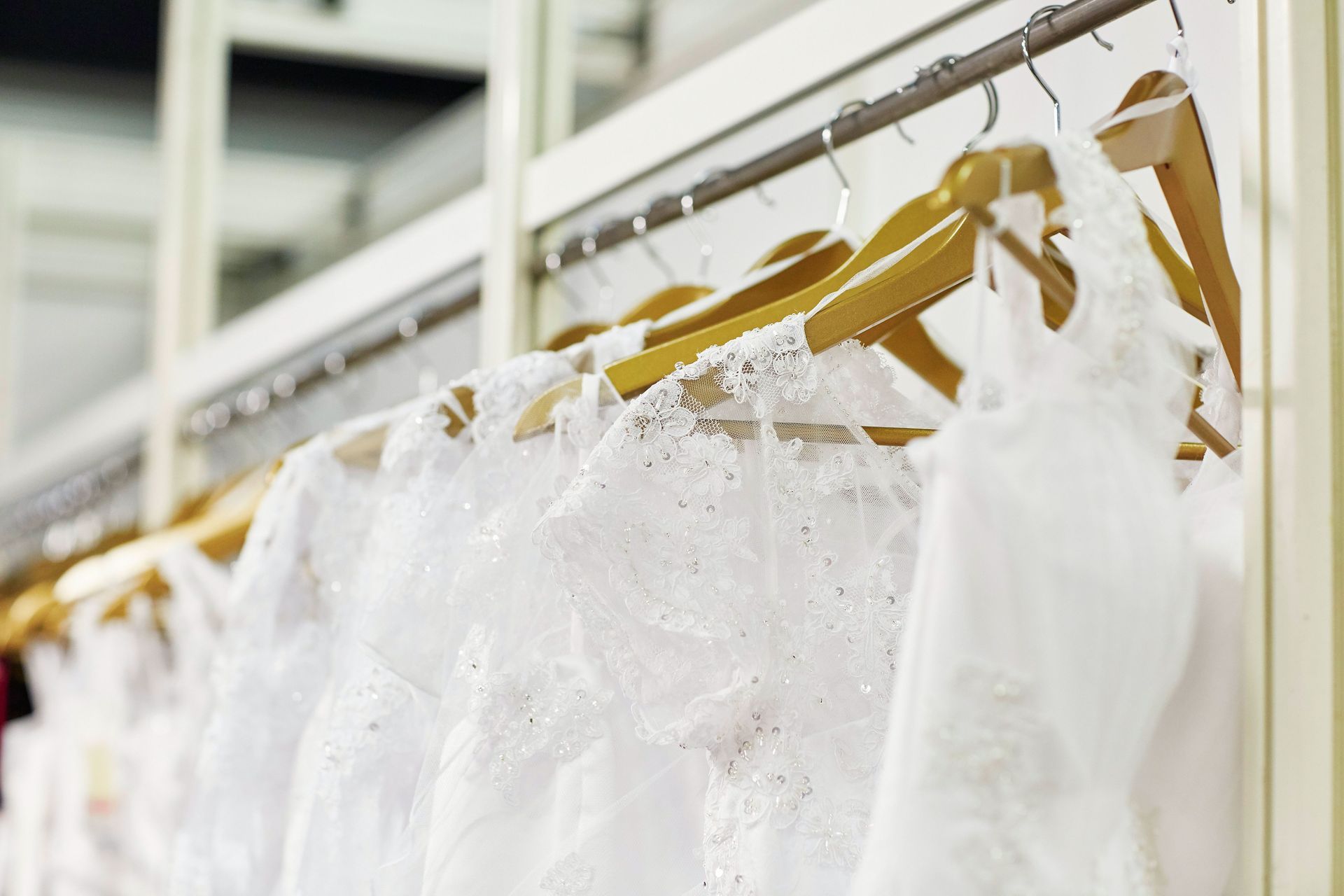
Working with garments adorned in fragile lace appliques, hand-sewn glass beads, and metallic embroidery requires a rare level of patience and craftsmanship. Standard sewing machines cannot handle these dimensional details, meaning the vast majority of this work must be executed by hand. Before a seam can be narrowed or shifted, the artisan must carefully remove every individual bead and lace piece along that specific line. Once the structural modification is completed safely, the embellishments are meticulously reapplied by hand to conceal the newly created seam. This invisible reconstruction technique prevents the decorative patterns from appearing cut off, mismatched, or visually disrupted at the closure points. A professional specializing in bridal gown modifications understands how to preserve the organic flow of botanical or geometric patterns across modified fabric panels. This time-consuming process separates mass-market tailoring from true luxury garment restoration, ensuring the artistic value of the textile remains intact. Investing this level of detail into the exterior surface guarantees a breathtaking appearance from every possible photographic angle.
Adjusting the Hemline for Graceful Movement
Achieving the perfect skirt length requires a delicate balance between dramatic visual impact and practical, real-world mobility on various flooring surfaces. A hemline that is even a fraction of an inch too long will cause the wearer to trip constantly while walking or dancing. To prevent this hazard, the tailor will precisely trim and finish the front and sides of the skirt while leaving the back train long. If the skirt features a scalloped lace border, the entire decorative trim must be detached by hand, raised uniformly, and reattached flawlessly. Multiple layers of tulle, organza, and satin lining must each be shortened individually to ensure the skirt drapes naturally without bunching. The final hem should hover exactly a quarter of an inch above the floor when the individual stands completely upright in their wedding shoes. This precise clearance allows the fabric to glide smoothly across carpeting, polished ballroom floors, and outdoor walkways without catching. Perfecting the length of your bridal gown transforms the walk down the aisle into a fluid, effortless movement that looks completely weightless.
Engineering a Secure and Beautiful Bustle
The dramatic train that looks spectacular during the formal ceremony can quickly become a cumbersome burden during a lively reception. To solve this dilemma, a specialized multi-point suspension system must be engineered directly into the back of the skirt assembly. An experienced specialist will design either an over-bustle using hidden loops and buttons or an under-bustle using numbered ribbon ties. This custom-built mechanism lifts the trailing fabric off the ground, matching the length of the rest of the hemline perfectly. Designing a functional system for a heavy bridal gown requires anchoring the points to the strongest internal structural seams of the bodice. A poorly constructed system will tear the delicate fabric under the physical strain of dancing, ruining the garment prematurely. The specialist will carefully demonstrate how to operate the buttons or ties so that family members can easily transition the dress after the ceremony.
Managing Delicate Pressing and Final Steaming
The physical modification process represents only half the battle, as the specialized fabrics require professional pressing to look their absolute best. Industrial irons with precise temperature controls are mandatory, as standard household appliances can easily scorch or melt delicate silk, polyester, and nylon fibers. Every newly created seam must be pressed flat from the interior layer outward to ensure the fabric lies perfectly smooth against the body. Technicians use specialized pressing hams and sleeve boards to shape curved areas like the bust, hips, and shoulders without flattening them. Steaming is conducted systematically from the top of the bodice down to the edge of the train to eliminate all packing wrinkles.
Walking out of the boutique with a completely customized masterpiece marks the official transition from planning to the reality of the celebration. Sweet Elegance Bridal remains deeply committed to providing the flawless craftsmanship, personalized attention, and structural mastery required to bring your dream ensemble to life. Contact us today to schedule your professional alteration consultation and discover how our dedicated team can sculpt your wedding gown into the absolute perfect fit for your special day.
Share On: